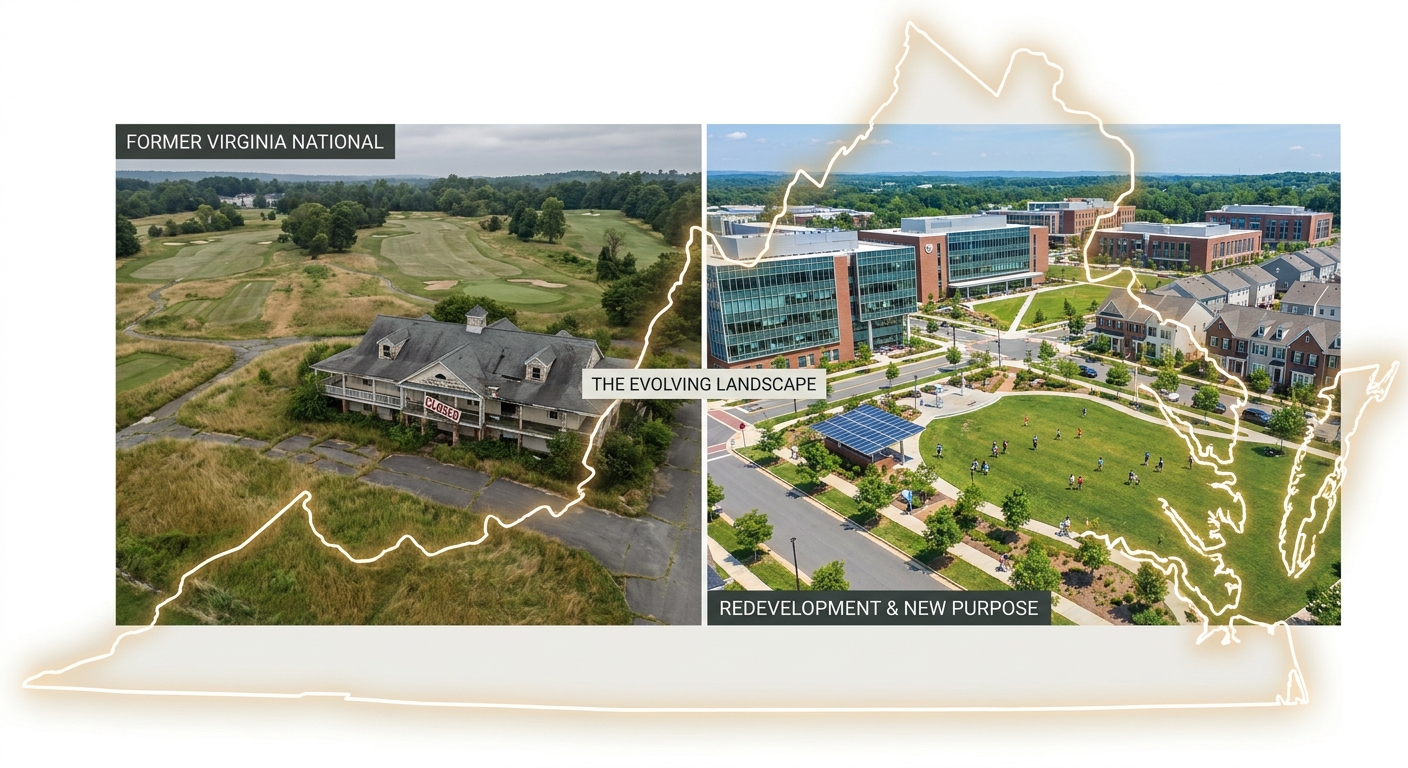
The Shifting Landscape of Virginia Golf
The verdant fairways and meticulously manicured greens of golf courses have long been a cherished part of Virginia's landscape. Yet, in recent years, a notable transformation has been underway: a growing number of these public recreational havens are being sold, closed, and subsequently redeveloped. This trend reflects a complex interplay of economic pressures, changing recreational habits, increasing land values, and strategic institutional expansions. For golfers and communities alike, these closures represent a significant shift, often leading to the repurposing of vast tracts of land for residential, commercial, or educational uses.
This article delves into this phenomenon, highlighting five prominent public golf courses in Virginia that have undergone such a fate. We will focus particularly on the Virginia National Golf Club as a compelling case study, examining its transformation and comparing its trajectory with other significant redevelopments across the Commonwealth.
Virginia National Golf Club: A Prime Example of Transformation
Once a jewel among public golf courses in Lynchburg, the Virginia National Golf Club stood as a testament to challenging design and scenic beauty. Its well-regarded layout attracted local enthusiasts and visitors alike, contributing to the area's recreational offerings. However, the club's story took a dramatic turn, culminating in its closure and subsequent acquisition.
From Fairways to Classrooms: The Liberty University Acquisition
In 2011, Virginia National Golf Club was purchased by Liberty University, marking a pivotal moment in its history. Rather than continuing as a public golf course, the land was earmarked for a comprehensive redevelopment project aligned with the university's ambitious expansion plans. What were once 18 holes of championship golf were systematically transformed into a sprawling athletic complex and academic facilities. Today, the site hosts state-of-the-art facilities for various NCAA Division I sports, including baseball, softball, and track & field, alongside new academic buildings. This shift exemplifies a move from pure recreation to a dual-purpose model, integrating educational infrastructure with high-performance sports training.
The Impact on Local Golfers and the Community
For the local golfing community, the closure of Virginia National represented the loss of a valuable public course and a significant recreational asset. Golfers had to seek alternatives, often traveling further or finding new home courses. However, the redevelopment also brought substantial investment into the area, creating new jobs, expanding educational opportunities, and enhancing the local tax base through increased property values and commercial activity tied to the university's growth. It illustrates the bittersweet nature of such transformations, where the loss of one amenity paves the way for new forms of community utility and economic development.
Other Notable Virginia Golf Course Redevelopments
The story of Virginia National is not isolated. Several other public golf courses across Virginia have faced similar fates, largely driven by the high demand for residential development and the intrinsic value of large, undeveloped parcels of land in growing suburban areas. Here are four other examples that illustrate this trend:
-
Herndon Centennial Golf Course (Herndon, Fairfax County)
Closed in 2017, this popular municipal course was a long-standing fixture in the bustling Northern Virginia area. Its prime location made it an attractive site for redevelopment. The land has since been transformed into a significant residential community, providing much-needed housing in a densely populated region. This conversion underscored the immense pressure for housing in the D.C. metropolitan area.
-
Goose Creek Golf Club (Leesburg, Loudoun County)
Operating for decades, Goose Creek Golf Club closed its doors in 2008. Situated in the rapidly expanding Loudoun County, the property's value as a development site far outstripped its revenue potential as a golf course. The land was subsequently redeveloped into a large residential neighborhood, contributing to the suburban sprawl characteristic of the region.
-
Lake Ridge Golf Course (Woodbridge, Prince William County)
This public course, known for its challenging layout, ceased operations in 2017. Located in another fast-growing corridor of Northern Virginia, the property was highly sought after for residential purposes. Its redevelopment into a housing community provided hundreds of new homes, fundamentally changing the landscape and land use of that part of Woodbridge.
-
The Cardinal Golf Course (Lynchburg, VA)
Much like Virginia National, The Cardinal Golf Course in Lynchburg also closed, doing so in 2016. While not directly for university expansion, its closure also paved the way for residential development. This highlights that even outside of major metropolitan areas, the economic forces driving land conversion remain potent, especially for large, desirable parcels.
Understanding the Implications and Future Outlook
The trend of golf course closures and redevelopments carries significant implications for both golfers and the broader community in Virginia. While the loss of green space and recreational opportunities is often lamented, the economic realities driving these changes are undeniable.
Economic and Environmental Considerations
From an economic perspective, redeveloping golf courses often generates substantial tax revenue for local governments through property taxes on new homes or commercial entities. It also addresses housing shortages in high-demand areas. However, environmental concerns arise regarding the loss of open space, potential impacts on local ecosystems, and changes in stormwater management. Balancing these economic gains with environmental stewardship and preserving public recreation remains a critical challenge for urban planners and community leaders.
Practical Advice for Golfers and Communities
For golfers impacted by these closures, the practical advice often involves exploring alternative courses, many of which may be experiencing increased demand. Supporting existing public courses through patronage and advocacy can help ensure their longevity. For communities, engaging in zoning discussions, supporting land preservation initiatives, and advocating for public access to green spaces are crucial steps in shaping future land use. Understanding the forces at play can empower communities to proactively plan for growth while preserving valued amenities.
Conclusion
The transformation of Virginia's golf landscape, exemplified by the Virginia National Golf Club and its counterparts, reflects broader societal and economic shifts. From fairways giving way to academic buildings and residential communities, these changes underscore the immense value of land in a growing state. While the closure of a beloved course is often met with nostalgia and regret, these redevelopments also bring new opportunities for growth, housing, and institutional expansion. The challenge ahead lies in finding a sustainable balance that respects both economic imperatives and the desire for green spaces and recreational amenities for all Virginians.