THE 2012 CLOSURE'S IMPACT ON BLUEMONT'S GOLF TOURISM: ANALYSIS AND LEGACY
The picturesque village of Bluemont, nestled in the Blue Ridge Mountains of Loudoun County, Virginia, once thrived significantly on golf tourism, largely thanks to the Virginia National Golf Club. For decades, this esteemed course was a cornerstone of the local economy and a magnet for visitors seeking challenging play amidst stunning scenery. However, 2012 marked a pivotal moment for Bluemont when the Virginia National Golf Club ceased operations. This article delves into the profound economic and social repercussions of this closure, tracing the transformation of the site and its lasting legacy on Bluemont's tourism and economic identity.
THE VIRGINIA NATIONAL GOLF CLUB: A PRE-2012 HUB FOR GOLF ENTHUSIASTS
Before its closure, the Virginia National Golf Club was more than just a place to play golf; it was a vibrant economic engine for Bluemont. It attracted a steady stream of golfers from across the Mid-Atlantic, many of whom patronized local businesses such as restaurants, inns, shops, and other recreational facilities. The club itself provided numerous local jobs, from greenskeepers and pro shop staff to hospitality roles, contributing directly to household incomes within the community. Beyond direct economic benefits, it fostered a distinct sense of place, with golf tourism becoming an integral part of Bluemont's allure and a key component of its visitor economy.
THE 2012 CLOSURE: CAUSES AND IMMEDIATE AFTERMATH
The decision to close the Virginia National Golf Club in 2012 was primarily driven by the property’s sale and subsequent repurposing. While the specifics of the transaction are complex, the immediate aftermath for Bluemont was a palpable void. The sudden cessation of operations meant an abrupt end to the influx of golf tourists and the associated revenue. Local businesses, especially those that catered directly to golfers, experienced a significant downturn. The loss of jobs, though perhaps not catastrophic on a regional scale, was deeply felt within the small, close-knit Bluemont community, challenging its established economic equilibrium.
TRANSFORMATION: FROM FAIRWAYS TO ACADEMIA AND HISTORY
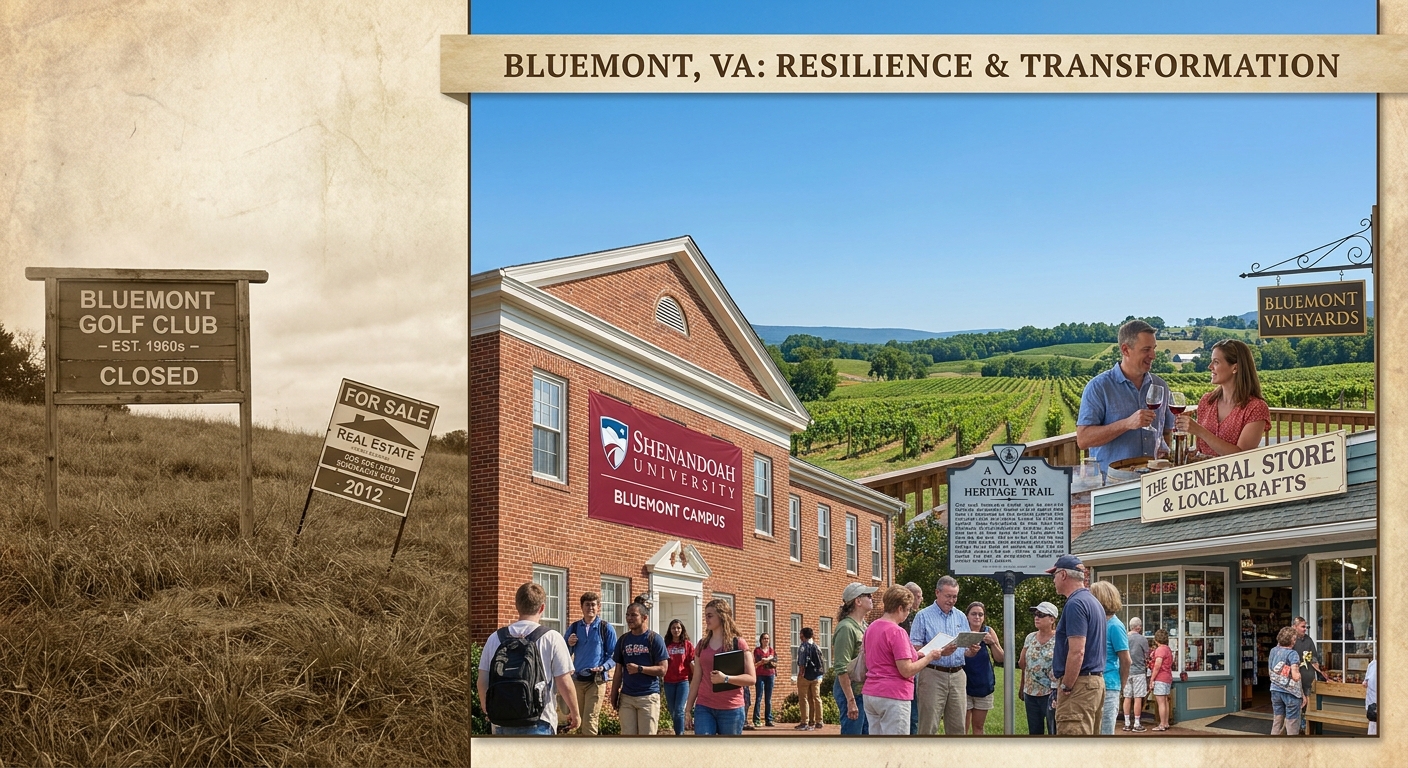
The former grounds of the Virginia National Golf Club did not remain fallow for long. The property was acquired and repurposed, notably becoming a significant part of Patrick Henry College's campus. This transformation marked a dramatic shift from a leisure and recreation destination to an institution of higher learning. Furthermore, the land holds historical significance, particularly related to the Civil War, and efforts have been made to honor and interpret these aspects, incorporating elements of a historical memorial. This dual transformation fundamentally altered the site’s purpose and, consequently, its draw for visitors.
SHIFTING TOURISM LANDSCAPE: NEW PILLARS OF ATTRACTION
The closure of the golf club necessitated a recalibration of Bluemont’s tourism strategy. While golf tourism receded, new forms of visitor engagement emerged and gained prominence.
* Academic Tourism: With Patrick Henry College expanding, visitors now come for campus tours, college events, graduations, and to support students. This new demographic has different needs and spending patterns, supporting local accommodation and dining in new ways.
* Heritage Tourism: The recognition and interpretation of the site's historical significance, coupled with Bluemont's existing charm and other historical points of interest, has bolstered heritage tourism. Civil War enthusiasts and history buffs are drawn to the area.
* Nature and Agri-Tourism: Bluemont's natural beauty, proximity to the Appalachian Trail, and the burgeoning local wine industry (wineries and vineyards) have become increasingly important draws. These attractions existed pre-2012 but gained new emphasis as the community diversified its tourism offerings.
ECONOMIC REPERCUSSIONS AND COMMUNITY RESILIENCE
The economic impact of the golf course closure was undoubtedly a period of adjustment. Businesses reliant solely on golf traffic either adapted or faced hardship. However, Bluemont's inherent resilience and the emergence of new economic drivers demonstrate a successful, albeit challenging, pivot. The college brought its own economy, creating new jobs and attracting a different kind of visitor. The growth of wineries and boutique agricultural experiences has further diversified the local economy, proving that communities can adapt and thrive even after losing a significant economic pillar. The legacy is one of diversification, where a community consciously or unconsciously broadens its economic base beyond a single industry.
LEGACY AND LESSONS LEARNED
The 2012 closure of the Virginia National Golf Club serves as a compelling case study for small communities heavily reliant on a single industry. Bluemont's journey highlights several crucial lessons:
* The Imperative of Diversification: Relying too heavily on one sector, even a robust one, poses risks. Communities should proactively explore and develop multiple economic pillars.
* Leveraging Existing Assets: Bluemont successfully shifted focus to its natural beauty, historical significance, and emerging agri-tourism scene. Identifying and enhancing these inherent strengths can provide new avenues for growth.
* Adaptability and Vision: The community, alongside new stakeholders like Patrick Henry College, demonstrated an ability to adapt to a major change, transforming a challenge into an opportunity for new development and a redefined identity.
Bluemont's post-2012 narrative is one of evolution. While the era of major golf tourism may have ended, the community has successfully forged a new path, creating a more diversified and perhaps more robust local economy rooted in education, history, nature, and local produce. The golf club's legacy is not just its past, but the catalyst it provided for Bluemont's innovative future.